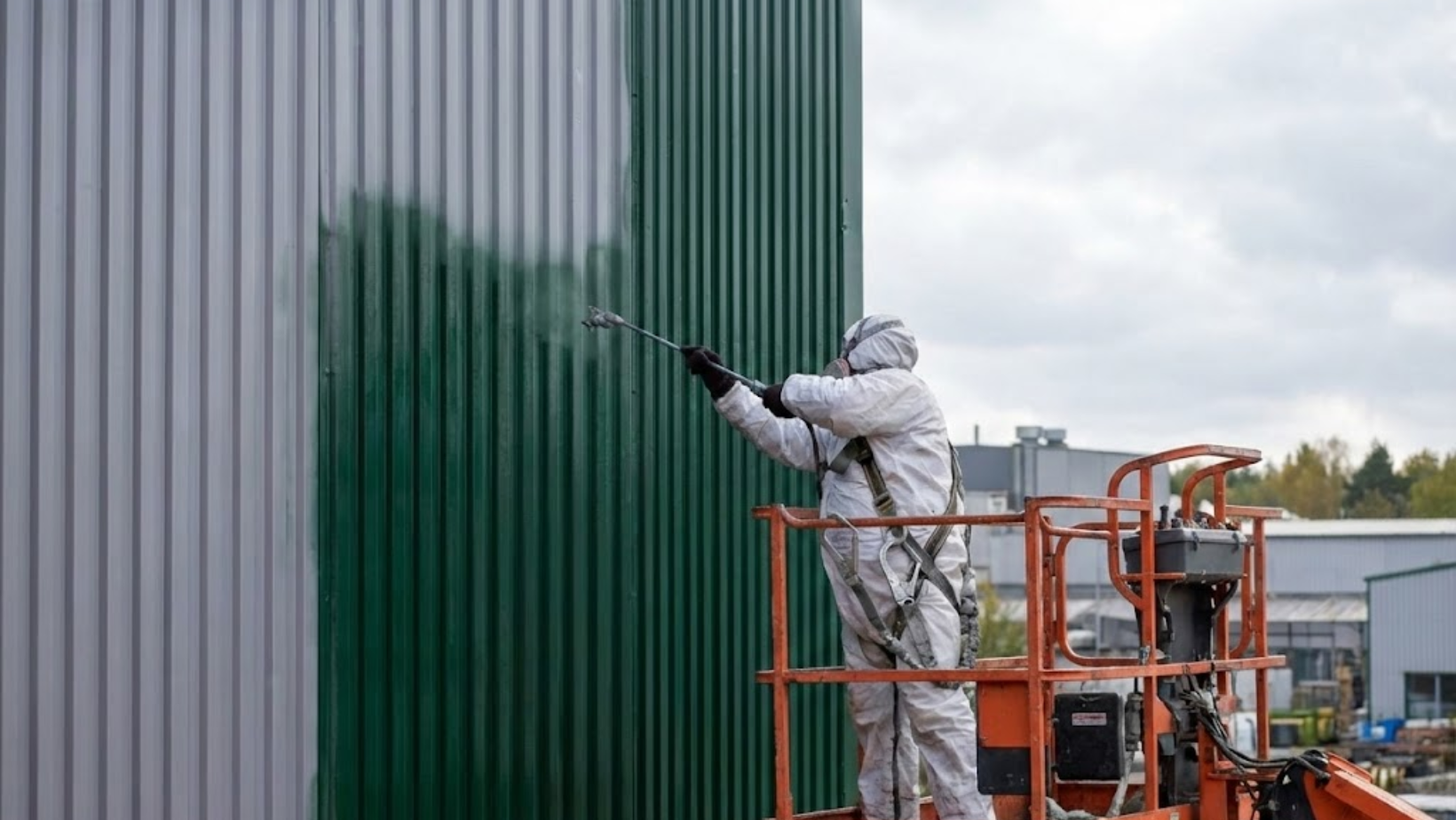
Every contractor who works with paint, epoxy, spray foam, or industrial coatings knows the
feeling. The wind shifts, a nozzle malfunctions, or containment slips for just a few minutes, and
suddenly vehicles or property nearby are covered in overspray that was never supposed to be
there. What you do in the next hour can determine whether this becomes a minor line item on
a claim or a drawn out dispute that follows your business for months.
Here is how to protect your liability position and set the claim up for a fast, fair resolution.
Stop the Source First
Before anything else, shut down whatever is causing the overspray. Continuing to work while
damage is spreading only adds more affected surfaces to the claim and makes the incident
harder to defend later. A contained, one-time event is always easier to resolve than an ongoing
one.
Do Not Let Anyone Touch the Affected Surfaces
This is the step that causes the most damage after the fact. Well meaning crew members,
property owners, or vehicle owners will often grab a rag, a solvent, or a scrub pad and try to
wipe the material off immediately. On cured epoxy, spray foam, or paint, this almost always
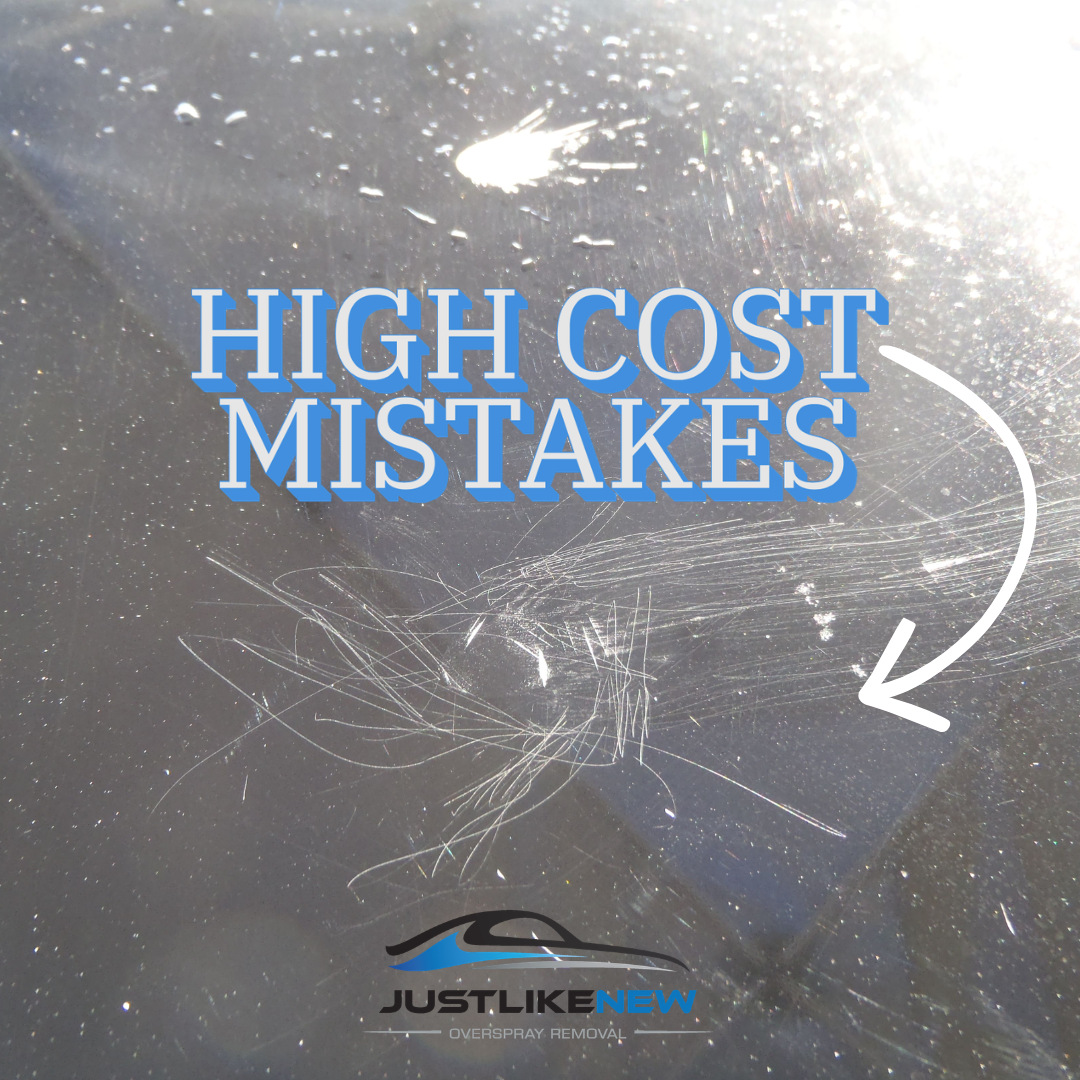
makes things worse. Scrubbing creates swirl marks, solvents can soften or stain the clear coat,
and partial removal can leave a shadow that requires a full repaint. Once that happens, the
claim severity goes up and so does the argument that your crew caused additional harm. Leave
the surfaces exactly as they are.
Document Everything on Site
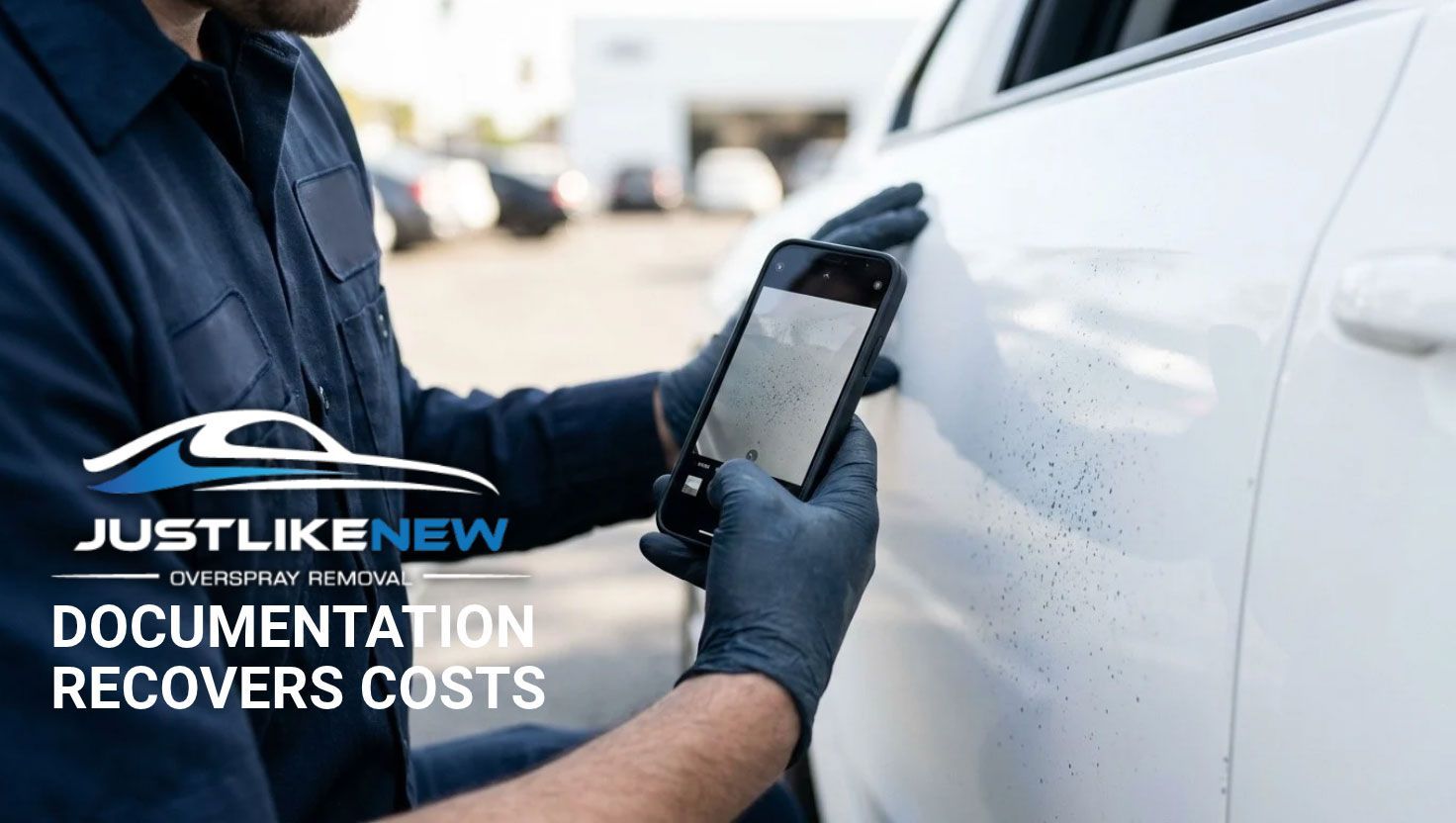
Before you leave the area, take clear photos and video of every affected surface, the
surrounding conditions, and anything that helps establish scope. Note the time, weather, wind
conditions if relevant, and the material involved. This record protects you if the claim is later
disputed or if the scope grows once a full inspection is done. The more complete your
documentation, the less room there is for disagreement down the line.
Notify Your Liability Carrier Right Away
Report the incident to your general liability carrier as soon as possible, even if the damage looks
minor at first glance. Delayed reporting can complicate coverage and puts you in a weaker
position if the claim expands once every affected surface is identified. Give your carrier the
same documentation you collected on site.
Call a Specialist, Not a Body Shop
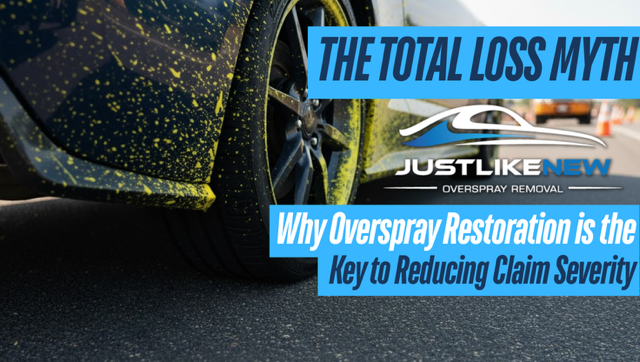
This is the step that has the biggest impact on how the claim resolves. Overspray on a vehicle or
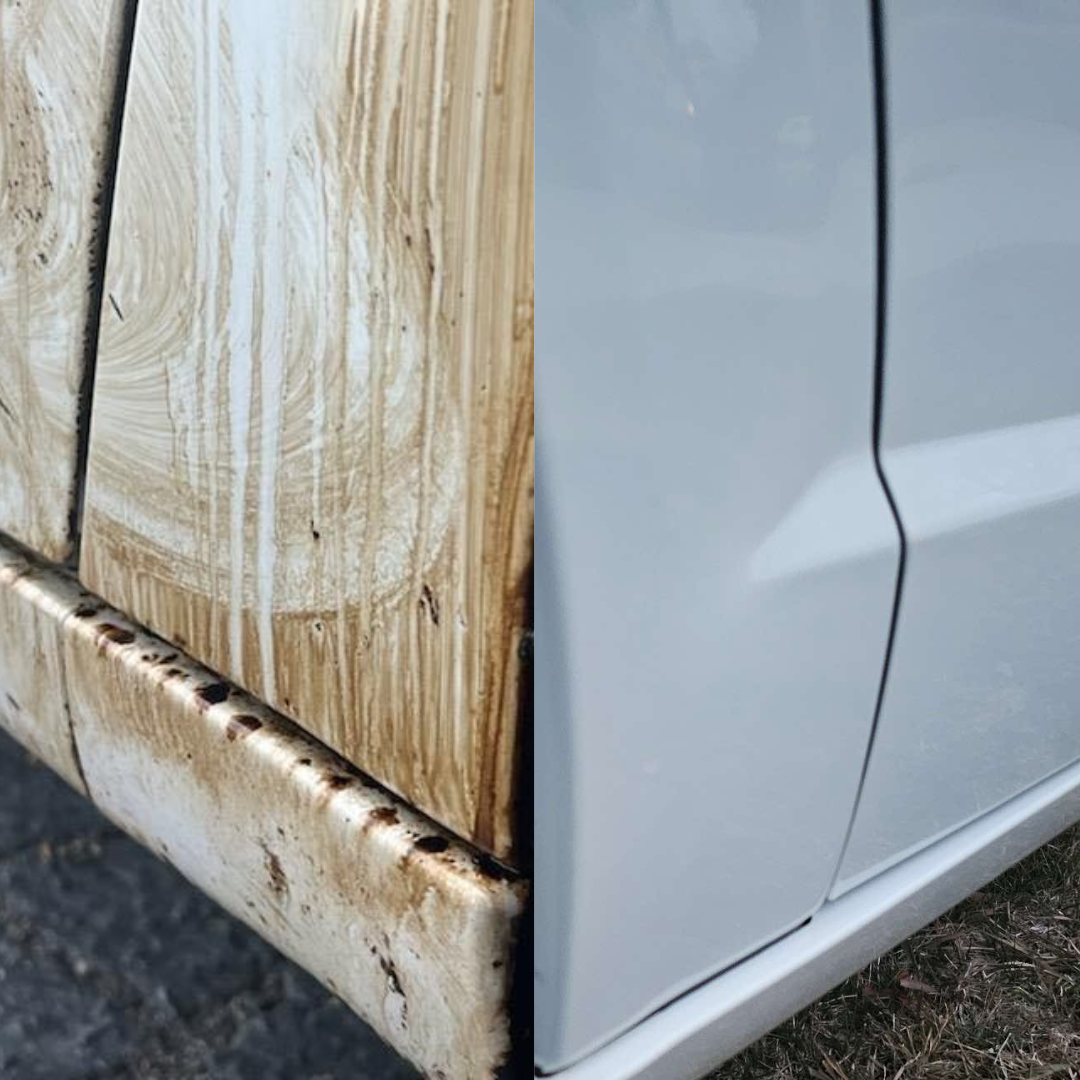
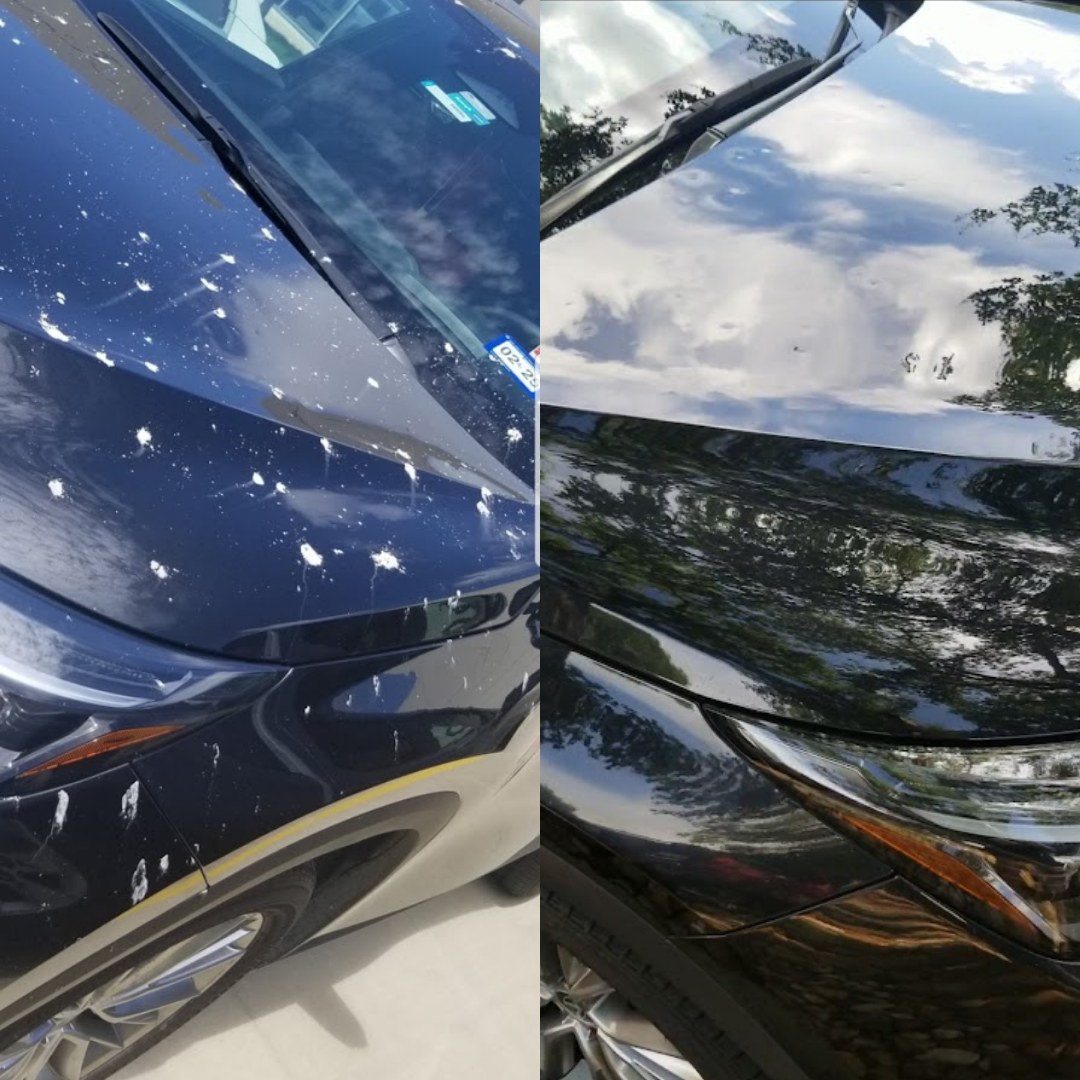
property does not require a repaint in the vast majority of cases. A restoration specialist can
often remove the contaminant and return the surface to its original condition without sanding,
stripping, or repainting. That keeps the claim smaller, keeps your insured relationship intact, and
avoids the extended downtime that comes with body shop scheduling. Loop in your carrier on
this recommendation directly, since it works in their favor as much as yours.
Let One Team Handle the Whole Incident
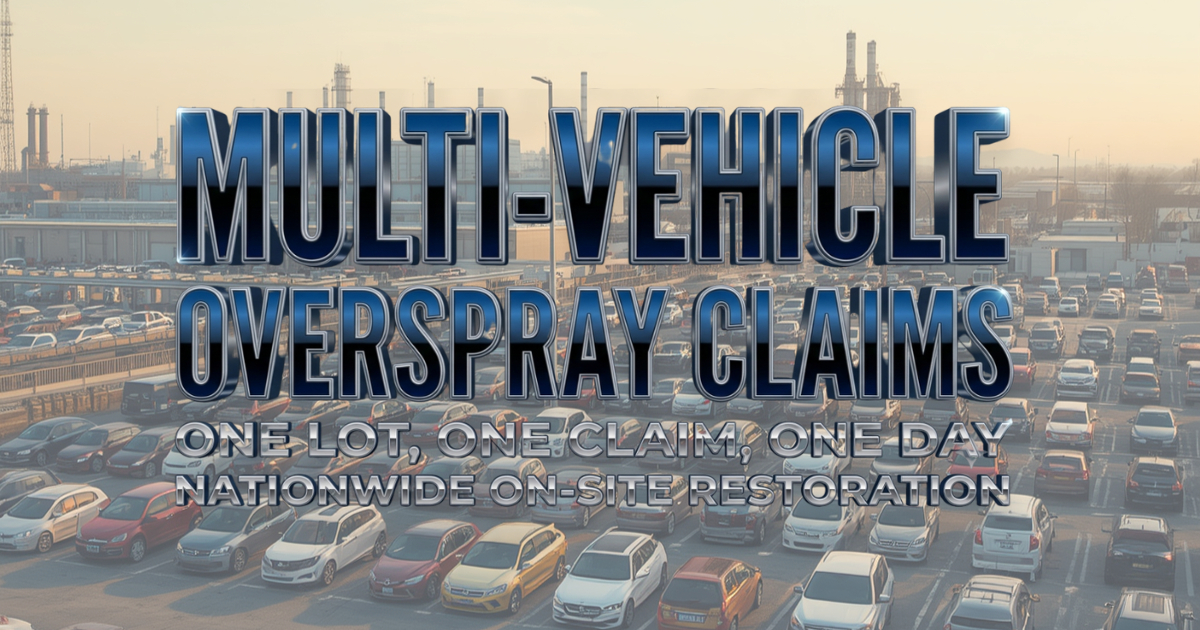
If the overspray affected more than a handful of vehicles or a larger section of property, resist
the urge to split the cleanup across multiple vendors just to move faster. A single restoration
partner who can assess, document, and resolve the entire incident keeps the story consistent,
keeps documentation uniform, and gives your carrier one point of contact instead of a pile of
mismatched estimates.
The Bottom Line
An overspray incident does not have to threaten your reputation or your relationship with your
insurer. The contractors who come out of these situations cleanly are the ones who stop the
source, protect the evidence, report quickly, and bring in a specialist before anyone touches the
damage. Handle the first hour right, and the rest of the claim tends to take care of itself.
If your crew has an overspray incident on a job site, call Just Like New Overspray before anyone
reaches for a rag. We provide nationwide, rapid response restoration for vehicles and property,
with documentation your carrier can rely on. Call 1-866-746-1445 or visit JLNOverspray.com.